
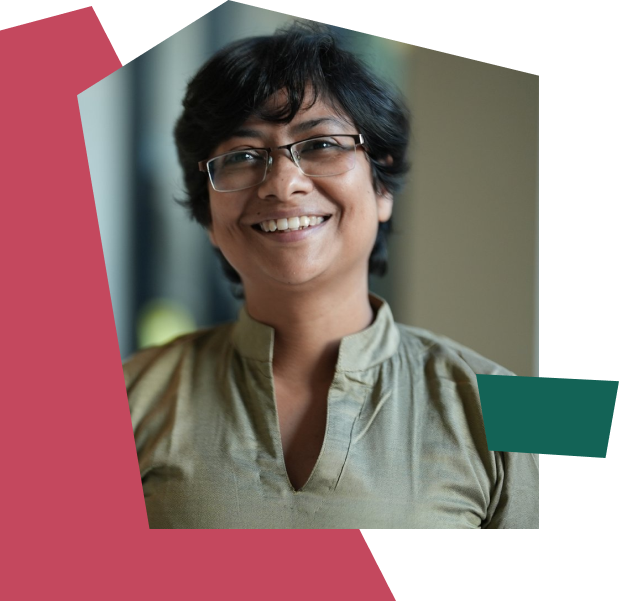
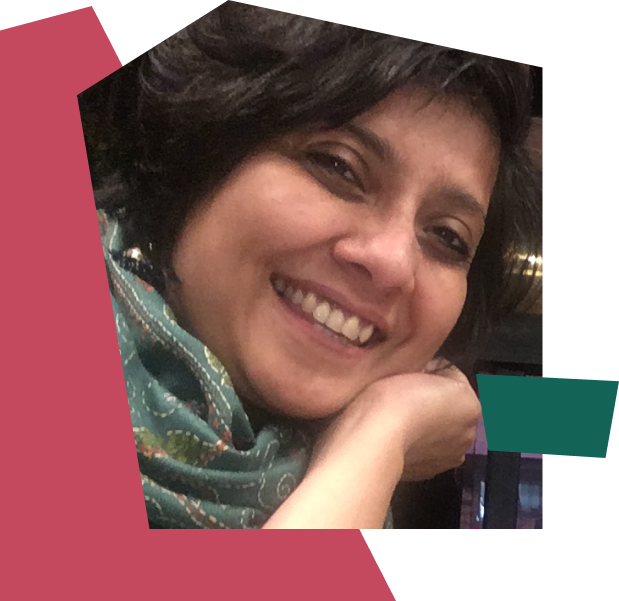
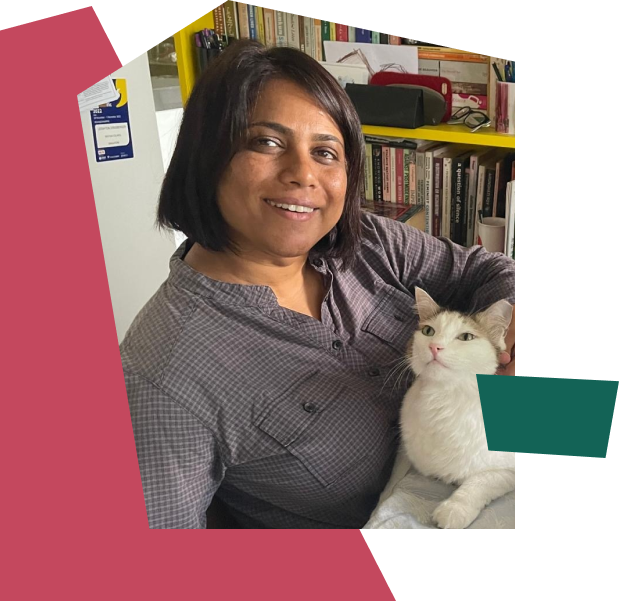

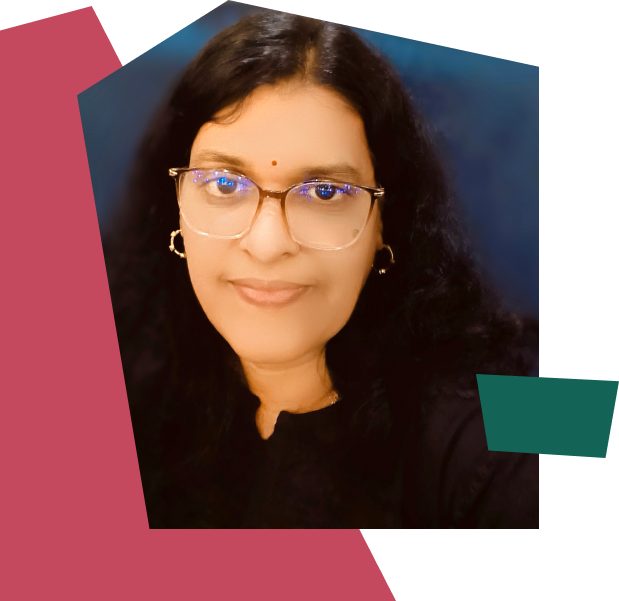
Don Hasar is a Queer-Trans* Rights Activist and a Cultural Resistance Worker. They have co-founded Himachal Queer Foundation(HQF), an organisation working for the rights of the LGBTQIAP+ community in rural mountainous Himalayas, where there is very little dialogue around gender and sexuality. HQF works primarily in Himachal Pradesh and in other neighbouring Himalayan states. Don’s work is centred around diversity with relation to various socio-cultural and regional nuances and acknowledging them while engaging with any community(es).
Don is one of the petitioners for establishment of the Transgender* Welfare Board in Himachal Pradesh. They are also currently one of the core members and India Representative for South Asian Transgender and Non Binary Network. At present, they are also working as a consultant for Women’s Fund Asia on a comprehensive report on Strengthening Women and Trans* leadership in India and serving as part of FRIDA Fund’s Global Advisory Committee. They aim to work around Global Trans* Advocacy, with a keen focus on Cultures, Policies, Legalities in rural spaces and the intersections between each of these in the light of Queer-Trans* welfare.
Social Work professional, activist, feminist, with three decades of experience, in development and human rights issues working in solidarity with women, children, Persons with Disabilities, People Living with HIV and AIDS, LGBTIQ people and other marginalized communities in countries of Asia (South Asia) and Africa (Southern and Western) in rural, urban, tribal and fragile contexts. Three decades of work at multiple levels, providing insights on global and National frameworks and methodologies to promote human rights, gender equality, inclusion, intersectionality, and feminist leadership for social transformation. Significant experience in cocreating, local to global actions around disability, gender based violence, HIV and AIDS, SRHR for women, youth and children. Highly skilled leader, with expertise in development of results based strategic frameworks, policy documents, training manuals, campaigns, advocacy and research papers. Strong track record in strategic leadership, project management, partnership development, multi country programme anchoring, consortium management, resource mobilization and donor engagement. A people’s person, passionate about rights, with proven abilities in starting and nurturing new initiatives, takes risks without fear of failure and leads by example.
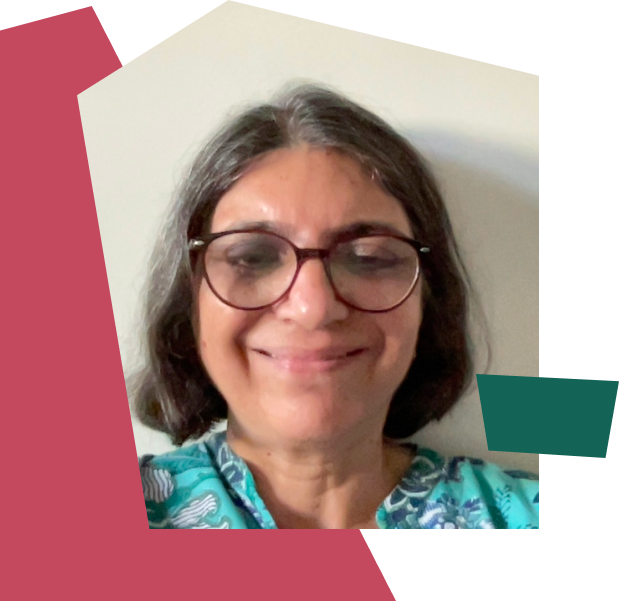
Monica Sakhrani is a Mumbai based consultant with over 30 years of diverse experience comprising legal practice, teaching, research and consulting. She has a post graduate in both law and social work and has submitted her doctoral thesis which she is pursuing from Tata Institute of Social Sciences, Mumbai. She practiced law for over 15 years initially in Chennai and then Mumbai working with largely marginalized communities doing constitutional, criminal, labour and family law. She joined TISS Mumbai as a faculty in 2008 in the School of Social Work teaching courses of law. Since 2016 she has been an independent consultant working on socio-legal issues. She has conducted research on gender and law including a 4-state study on the implementation of the Protection of Women Against Domestic Violence Act (PWDVA) and an evaluaton of Special Cells in Maharashtra. She was the Chairperson of the Local Committee (Mumbai Suburban) from 2015 to 2022 and has been a POSH consultant since 2002. She is Program Advisor Fair Trial Program, a program of Project 39A of National Law University Delhi since 2018. She is also a consultant with GenderSphere.

Amrita Gupta brings 15 years of experience in mixed method research, monitoring and evaluation and policy review with a passion for advancing gender equality, women’s health, and economic opportunities. She has a Master’s in Public Health, Health Policy Economics and Finance from TISS, Mumbai, and a Masters in Sociology from Delhi University. She has worked the Data Lead- Global Accountability at the Global Fund For Women, She also led research, monitoring and evaluation and strategic communication for Azad Foundation India, a non-profit organization that empowers women to become professional drivers. She has published papers, presented at various conferences, and conducted workshops on gender and work, women in transport, livelihoods and skills. She was also associated with the BITS School of Management (BITSOM) as a visiting faculty member for Sociology. She is also a core team member of Gender & Equity Network South Asia GENSA which is a special interest group of the community of evaluators South Asia.”

Arundhati is a feminist activist, researcher and facilitator with over a decade of experience in organising around women’s human rights and feminist leadership-building across India and South Asia. With degrees in History and Sociology from the University of Delhi, she dabbled in travel writing and sports journalism for a few years, and brought her love for stories and storytelling into her curiosity about the role of media and histories in fostering solidarities and young feminist movements. She has worked with organisations across India to build intersectional feminist perspectives and programs, and done extensive research on the role of resourcing in building and sustaining feminist movements.
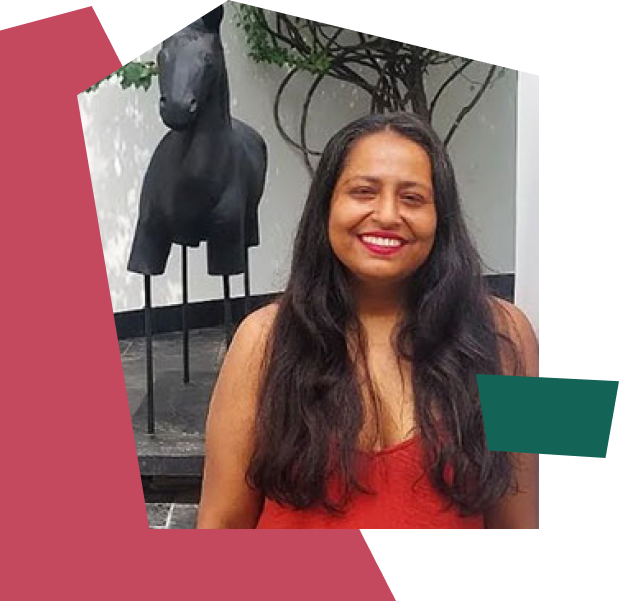
Jyotsna Siddharth is a development practitioner, artist, and advocate for Diversity, Equity, and Inclusion (DEI), intersectionality, gender, caste, and minority rights. They have served as the Country Director of Gender at Work India, leading institutional change initiatives and fostering inclusive workplaces. With extensive experience in non-profits and UN agencies, Jyotsna works at the intersection of policy, advocacy, and social justice. A Chevening Scholar, they hold a Master’s in Development Studies from TISS Mumbai and a Master’s in Social Anthropology from SOAS, University of London. Recognized for their contributions, they were a Cosmopolitan Blogger’s Award nominee (2023) for Dalit Feminism Archive and featured in Edex & New Indian Express’s 40 Under 40 (2020). Jyotsna is a peer advisor to Feminism in India, The Rights Collective UK, and CPA Project. Their work has been widely published and showcased in leading media, academic, and cultural platforms.
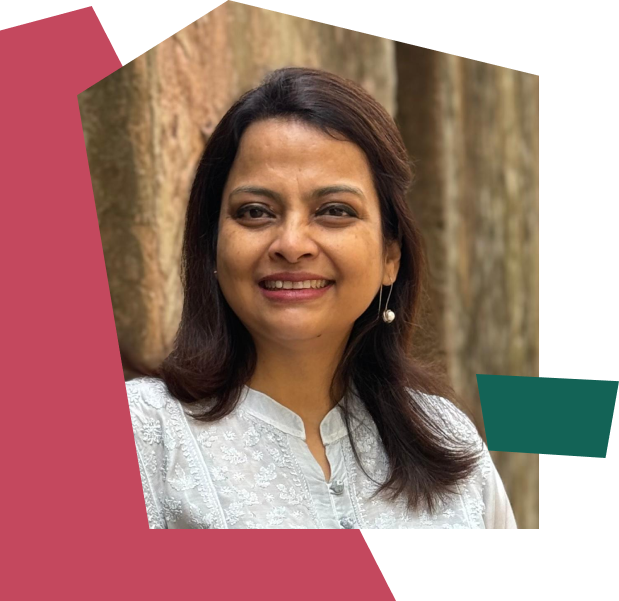
Pooja is a seasoned executive coach, team coach, and consultant with extensive experience in leadership development, change management, and diversity & inclusion. She has worked with senior leaders across industries, helping organizations drive transformation through diagnostics, agile methodologies, and evidence-based coaching. Drawing from mindfulness, psychodrama, positive psychology, and cognitive behavioral therapy, she enables individuals and teams to unlock their full potential. In her corporate career, Pooja held multiple leadership positions at a Big 4 firm, leading change management initiatives for Fortune 100 companies across the US, Europe, and Asia. She managed high-performing, multicultural teams, delivering large-scale projects for clients such as American Express, Cisco, and Vodafone. A recognized expert in talent and leadership trends, she has co-authored reports with NASSCOM and NHRDN. Passionate about inclusive workplaces, she consults on gender, diversity, and inclusion policies, with clients including Schneider Electric, Amazon, and ILO.

Apoorva is feminist researcher and practitioner with over two years of experience in the development sector. Her work is grounded in gender justice and human rights, with a strong focus on feminist pedagogy, research, evaluations, and capacity strengthening. She is particularly interested in the intersections of gender and data, leveraging data visualization and evidence generation to bridge research gaps and make insights more accessible and actionable. Apoorva holds a Master’s degree in Global Studies from Ambedkar University and a Bachelor’s in Political Science from Gargi College, University of Delhi. She has contributed to research-driven initiatives on education, gender, and social justice through her work. Her experience spans in research and advocacy. Sakhi Saathi, a social initiative that she led, focused on empowering domestic workers and their children, addressing critical issues such as education and SRHR. With a deep commitment to driving social impact, she aspires to continually expand her expertise and contribute to meaningful change.
Zarka, born and raised in Jammu and Kashmir, she holds a postgraduate degree in Gender Studies from Ambedkar University, Delhi and a bachelor’s degree in Literature and History from Gargi College, University of Delhi. With a passion for human rights and gender equality, since her early college years Zarka has actively engaged with organizations dedicated to social causes. Zarka has also worked closely with grassroot organizations in Kashmir, including the JKCCS and APDP. Her master’s thesis, titled “Enforced Silences: A Study of Women’s Mourning and Resistance,” explores the gendered experiences of loss and suffering among women in the Kashmir conflict. Following her postgraduate studies, Zarka was a fellow at IUIF, where she received intensive training in communication and media-related fields. In 2022, she was awarded the IUIF Fellowship Grant for her podcast proposal placing it among the nine communication projects unconditionally approved by the distinguished jury within the entire cohort.
Malathi Lata Pillalamarri is a seasoned finance and administration professional with over 16 years of experience in donor fund management, financial planning, and regulatory compliance. She has led financial operations for large-scale development programs in poverty alleviation, health, nutrition, water, and education, supported by global organizations such as the World Bank, IFAD, and the Global Fund. Her expertise includes financial strategy, budgeting, grant administration, internal controls, audit facilitation, statutory compliance, procurement, and payroll management. She has been instrumental in strengthening financial systems, ensuring compliance with donor and regulatory requirements, and optimizing operational efficiencies. In addition, she has actively worked on building the financial management capacities of partner organizations, enhancing their ability to maintain transparency and accountability in fund utilization. With a strong commitment to financial governance and accountability, Malathi brings a strategic approach to resource management, risk mitigation, and process improvement, supporting organizations in achieving long-term sustainability and impact.

Vandana Mahajan is a gender equality and social inclusion expert with over 35 years of experience across South Asia and East Asia. She specializes in gender-responsive development, inclusive education, children’s rights, and women’s and girls’ empowerment. Vandana has collaborated with UN agencies, INGOs, and government programs, including a six-year tenure with UN Women as a Gender and HIV Programme Officer for South Asia. She has designed and led capacity development initiatives using intersectional and feminist approaches, supporting strategic visioning and policy advocacy. As an independent consultant for 24 years, she has worked with organizations such as UNICEF, UN Women, and CREA, focusing on gender training, evaluation, and strategy-building. She has also contributed to national gender training programs in India. Vandana holds a Master’s in Social Work (MSW) and a Bachelor of Science (BSc) in Home Science (Child Development) from Delhi University. Her expertise lies in fostering transformative, participatory change in development programs.
Shraddha Chigateri is a feminist researcher and evaluator with over 25 years of experience in conducting multi-country, multi-sectoral research and evaluations and teaching on women’s equality, gender justice and human rights. She has a PhD in Women and Gender Studies and an LLM in Law in Development from the University of Warwick. Since 2018, she has worked independently and with Gender at Work Consulting (now GenderSphere) for several global, regional, national and local organisations and networks for whom she has carried out research on women’s rights, conducted complex evaluations and supported strategy building processes. Previously, she worked as a Research Fellow at the Institute of Social Studies Trust, New Delhi where she led and contributed to several research and evaluation projects focused on surfacing gendered inequalities and advancing women’s human rights. Prior to that, she worked in the UK as a lecturer, tutor, and researcher at the Universities of Warwick and Keele, where she taught courses on gender and law, and gender and development at both undergraduate and postgraduate level.
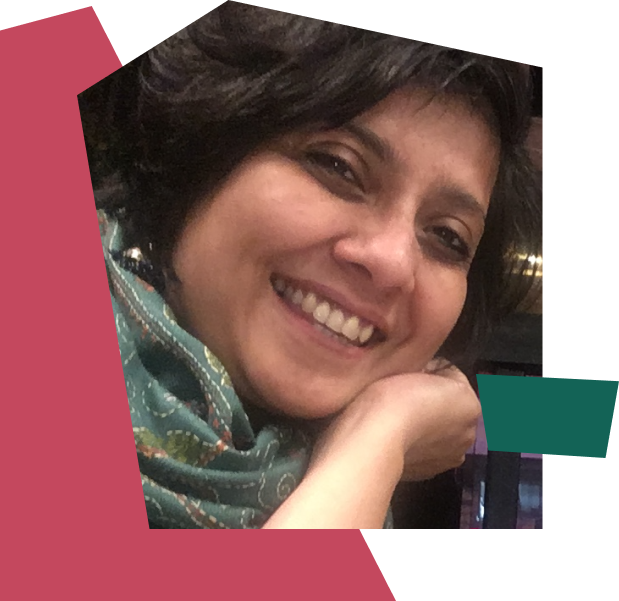
Asmita Basu has over 25 years of expertise in gender, human rights, and law. She has extensive experience in project management, program evaluation, research, campaigning, advocacy, and capacity development. Her work spans multiple regions, particularly Asia, with in-country experience in India, Bangladesh, Lao PDR, and Yemen, where she has led and supported legal and policy reform initiatives, conducted gender-focused evaluations, and designed programs to strengthen women’s rights and access to justice. She has worked with leading international and regional organizations, including UN Women, UNDP, Amnesty International, GAATW, APWLD, and MSF. She has conducted multi-country studies on gender-based violence and evaluated programmes addressing a range of issues including women’s rights, labour, child, migrant/refugee, and human rights, as well as women’s leadership initiatives. She has also provided strategic advisory support on gender integration and law. She has served as an instructor for the GenderPro Initiative at George Washington University, where she trained development professionals in gender mainstreaming and analysis. Her approach is deeply rooted in feminist and participatory methodologies, ensuring that legal and policy interventions are shaped by the lived experiences of marginalized communities.
Sudarsana has over two decades of experience in gender equality, feminist leadership, and institutional change. Her expertise lies in developing and evaluating feminist leadership models that challenge traditional power structures, emphasizing participatory and qualitative approaches to understand the lived experiences of women leaders. As the former executive director of Gender at Work Global, she has designed and led numerous global research and evaluation projects on gender justice and inclusive leadership. Sudarsana has led numerous high-impact projects, and provided strategic direction, technical assistance, and financial management for global governance portfolios, further enhancing her expertise in large-scale program monitoring and evaluation. With advanced degrees in Public Administration from Columbia University and Business Administration from XLRI School of Management, Sudarsana has developed a strong career in both international and grassroots settings.